
Should CAD automation also be your customer configurator?
Compare engineering automation with a customer-facing configurator by checking inputs, permissions, model detail and quotation handoffs.
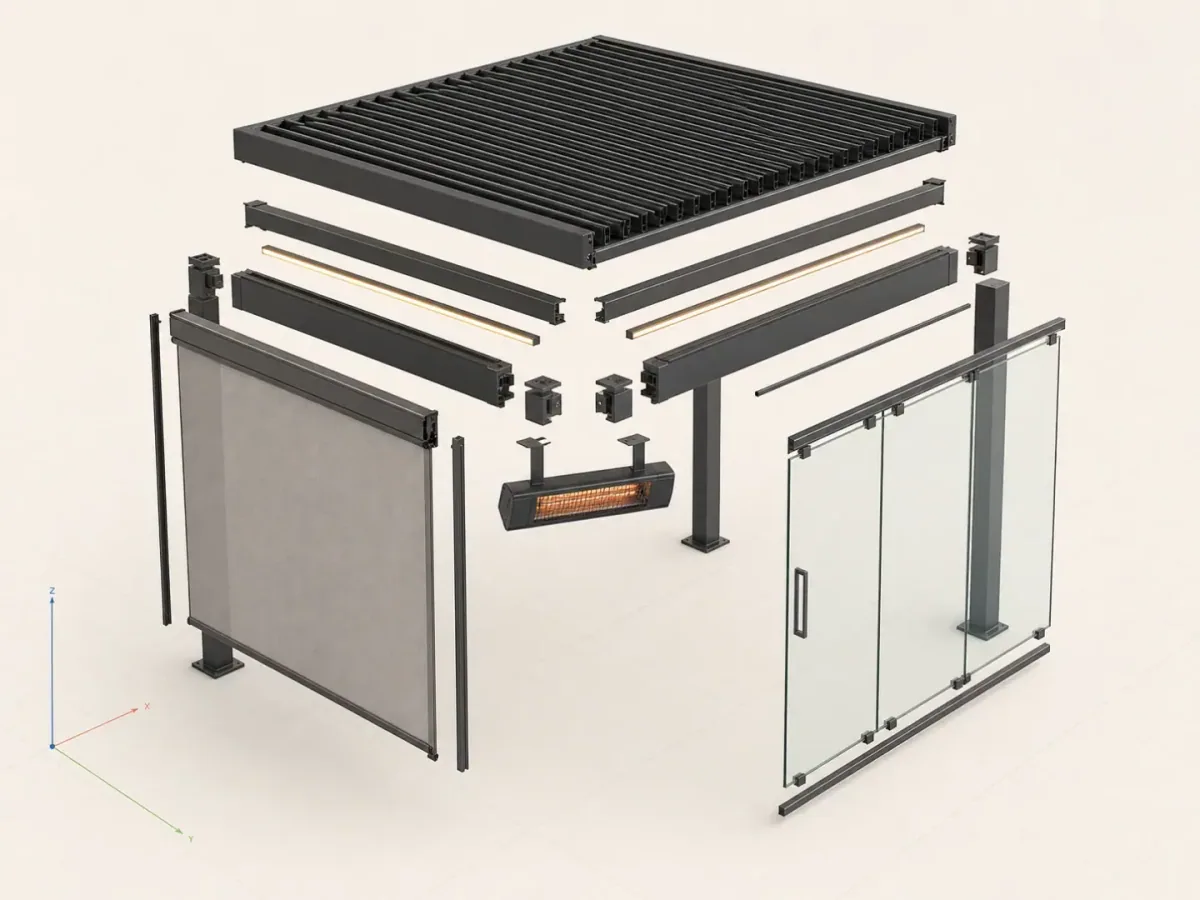
Table of contents
CAD automation and a customer configurator can use related product rules while serving different users. Engineering may need detailed geometry and drawing controls. Customers need understandable choices, fast feedback and a clear commercial next step. Buying one tool to do both jobs should follow a tested workflow, rather than an assumption that any parametric model is ready for public use.
Describe the two jobs separately
An engineer might choose manufacturing features, inspect assemblies and generate drawings. A buyer might choose overall dimensions, finish and accessories without understanding component construction. Some engineering parameters should be fixed or derived before the customer sees the product.
Autodesk describes iLogic rules as programs controlling Inventor parameters, features or components. Autodesk iLogic documentation. That establishes a design-automation capability, not the suitability of a particular model for your sales journey.
Test a change that affects engineering and price
Use a product with a reinforcement threshold. Let a customer change its width across that threshold. Inspect the visible explanation, allowed dimensions, commercial calculation and engineering request. Decide which system owns the threshold and how the other system receives the accepted result.
Then deliberately change a rule in only one place. The test should reveal the mismatch before an order is approved. Two independently maintained copies of a critical rule can disagree even when both interfaces look convincing.
| Responsibility | Buyer-facing application | Engineering environment |
|---|---|---|
| Product questions | Customer terminology and permitted choices | Technical parameters and review |
| Geometry | Suitable public product representation | Required engineering detail |
| Commercial output | Offer and selected scope | Agreed technical contribution |
| Exceptions | Clear referral with retained selections | Engineering decision and approved revision |
Decide what should cross the boundary
A useful handoff might contain a product reference, configuration revision, dimensions, selected options and an approval status. It does not necessarily require transferring the full engineering model into the browser. Likewise, a public 3D preview does not prove that production drawings can be generated from it.
For a Configurix CAD-connected workflow, specify the required files, versions, ownership and failure handling. Ask for one accepted configuration to be traced into the exact engineering output your team needs. Treat unsupported geometry as an exception with an owner, rather than silently simplifying the order.
Buy a connected process when both jobs matter
Keeping an existing engineering tool can be a strength. Your engineers retain a familiar working environment while the customer journey is designed for sales. The important procurement question is whether the connection is maintained, tested and supported when either catalogue or engineering definitions change.
Can we use existing CAD models in a web configurator?
Potentially, after reviewing format, detail, materials, permitted parameters and conversion needs. Request an assessment of representative files before assuming that the complete library is ready.
Does a configurable 3D preview replace engineering approval?
No. Define which configurations are approved catalogue products and which still require technical review. The software should make that boundary visible to sales and engineering alike.
Book a private Configurix demo
Bring your product range, price list and a representative quote. We can define the configuration and sales workflow around your business.
Book a private Configurix demo →Related articles
Do you need CAD files before buying a 3D configurator?
Understand what a 3D configurator supplier needs when CAD is missing: dimensions, product references, photographs, materials and approved examples.
How do you compare configurator proposals with different scopes?
Normalize configurator proposals by product coverage, outputs, integrations, exclusions and acceptance evidence before comparing totals.
Which configurator orders still need engineering approval?
Define the boundary between approved catalogue configurations and engineering exceptions, including thresholds, missing inputs and recorded decisions.
Can a customer compare two saved product configurations?
Specify side-by-side configuration comparison with independent options, consistent price bases, clear differences and a traceable chosen revision.